Core NW3 · Guide one of four
Hampstead & the Heath
The village on the hill, the largest piece of open ground in inner London, and some of the most tightly protected streets in the country. What the housing stock actually is, how the schools admit, what the transport really costs you in time, and where the money sits.
- Postcode
- NW3The village, the Heath, and the streets west to Finchley Road
- The Heath
- 275 hectaresUnenclosed and unbuilt on by Act of Parliament since 1871
- Conservation areas
- ThreeHampstead, Redington and Frognal, Fitzjohns and Netherhall
- Nearest stations
- TwoHampstead on the Northern line, Hampstead Heath on the Overground
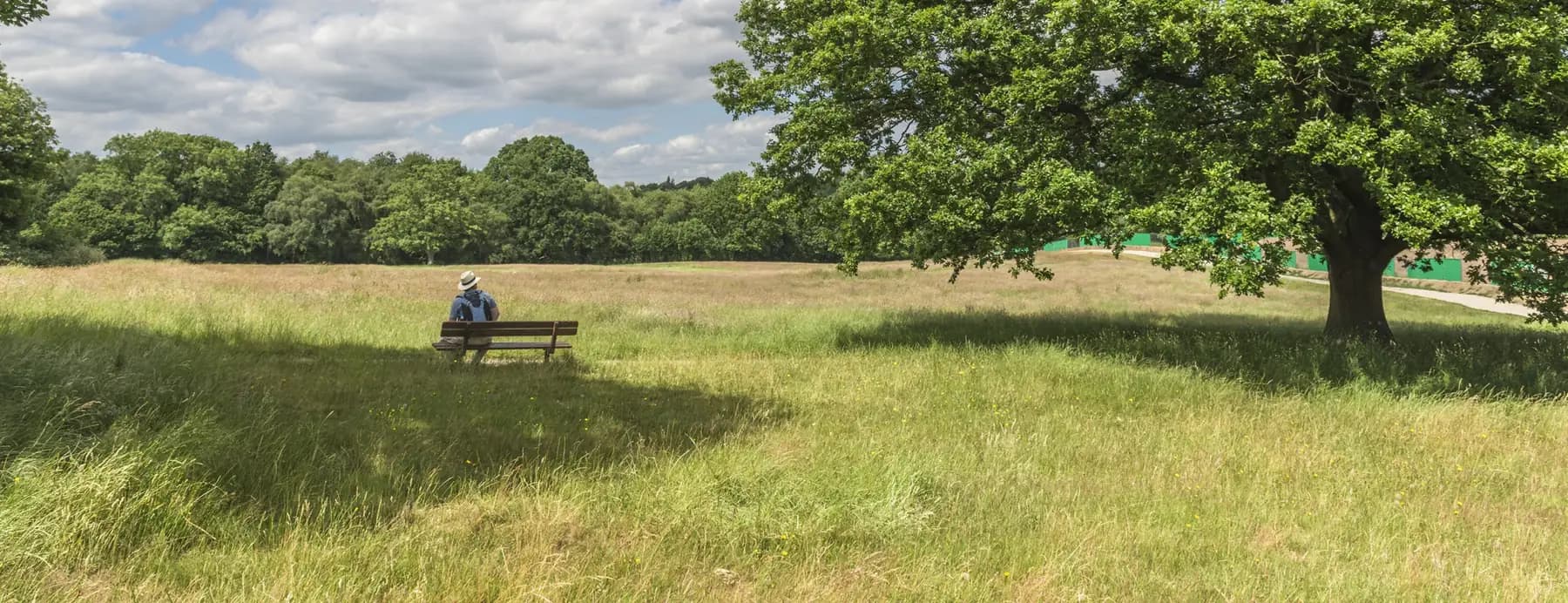
Hampstead Heath275 hectares of grass, woodland and ponds. Section 12 of the Hampstead Heath Act 1871 requires it to stay open, unenclosed and unbuilt on, so it looks like this by statute rather than by policy.
Every factual claim on this page was verified against a primary source on .
Camden Council · conservation areas, Article 4 directions, admissions, parkingDepartment for Education · every named schoolHistoric England · listed buildings and gradesGreater London Authority · protected viewsOffice for National Statistics · the price figures
Planning rules change. Camden replaced three of its Article 4 directions in June 2026. Anything on this page that turns on a planning instrument should be confirmed against the current one before you act on it.
Streets and characterThree conservation areas, and they do not behave the same way.
Nine streets, three designations, and what the council will not let you change
Most of what people mean by Hampstead sits inside one of three designations, and the difference between them matters more than the postcode does. The Hampstead Conservation Area covers the old village and was adopted in October 2001. Redington and Frognal and Fitzjohns and Netherhall were both adopted much more recently, in December 2022, which means their appraisals are current rather than twenty years out of date.
Practically, that recency cuts both ways. A newly appraised area has clearer guidance, so a well judged application has a better road map. It also means the council has recently restated what it will not accept. What each area actually restricts, though, differs sharply, and the section below sets out how.
The village core
The oldest fabric is Georgian and it is concentrated in a small area. Church Row is the set piece, developed from the 1720s, and Pevsner called it the best street in Hampstead. Almost every house on it is individually listed, at Grade II and Grade II*, and the detail is where the value sits: the doorcases, the fanlights and the ironwork. Note that the north side is not uniformly Georgian, since Gardnor Mansions is late Victorian. Flask Walk and the lanes around it are more mixed, with Georgian work sitting directly against later infill, which is part of the appeal and part of why every application there is looked at closely.
The Victorian and Edwardian hill
Redington and Frognal is a different animal altogether. It was built out mostly between the 1870s and the middle of the twentieth century as a garden suburb, and its character is Queen Anne Revival and Arts and Crafts, with Gothic, Classical and later Modernist work mixed in. The palette is consistent and worth knowing: red brick, often with render or tile hanging, plain clay tiles on pitched roofs, stone dressings, terracotta detail, and timber windows that are frequently divided into small panes.
The plots follow a pattern too. Small front gardens set the houses back behind hedges, and the rear gardens are generous with mature trees. That green, leafy character is explicitly part of what the designation protects, which is why the front garden is usually the first thing an inspector looks at.
The area also carries genuinely significant architecture, and a good deal of it is listed at the higher grade. C.F.A. Voysey built Annesley Lodge on Platts Lane in 1895 to 1896, for his own father, and it is Grade II*. Philip Webb designed the pair of semi-detached cottages at numbers 2 and 4 Redington Road in 1876, also Grade II*. James Gowan's Schreiber House of 1962 to 1964 on West Heath Road is Grade II, one of the most significant post war houses in London. Buyers who want a clean modern box sometimes do not realise that the modern box next door may itself be listed.
What you may change
Camden confirmed a new Article 4 direction across the Hampstead Conservation Area with effect from 9 June 2026, replacing the earlier direction of 2010, with a separate direction covering Frognal Way. On front and street-facing elevations it removes permitted development rights for the usual list: windows and doors, roof alterations, chimneys, hard surfacing, boundary walls and painting previously unpainted brick. Like-for-like repair is exempt.
Redington and Frognal and Fitzjohns and Netherhall were given directions of their own on the same date, and they are far narrower. They cover only three things: hard surfacing at the front or a side fronting a highway, gates, walls, fences and other enclosures at the front or side, and demolition of those boundary structures. They do not control windows, doors, roofs, rooflights, chimneys or painting. Assuming parity with the Hampstead direction would substantially overstate the restrictions on a purchase in either area.
Planning position as at 4 September 2026
Hampstead is covered by three conservation areas. The village core is Georgian and centres on Church Row. Redington and Frognal, to the west, is a garden suburb built from the 1870s onwards in red brick, tile hanging and plain clay tiles, set behind small front gardens with large gardens to the rear. All three gained new Article 4 directions on 9 June 2026, but they are not equivalent: Hampstead's controls windows, roofs and painting, while the other two cover only front hard surfacing and boundary walls.
- Church RowDeveloped from the 1720s. Almost every house individually listed, at Grade II and Grade II*. Pevsner called it the best street in Hampstead.Hampstead CA
- FrognalLong and varied, running from the village down towards Finchley Road. Substantial detached and semi-detached houses at the upper end.Hampstead & Redington/Frognal
- Redington RoadWide, leafy and consistently large. Philip Webb's pair of cottages at 2 and 4, of 1876, are Grade II*.Redington/Frognal CA
- Platts LaneVoysey's Annesley Lodge of 1895 to 1896 at number 8, Grade II*. Arts and Crafts character throughout.Redington/Frognal CA
- Ferncroft AvenueGarden suburb layout, red brick and tile hanging, deep rear gardens.Redington/Frognal CA
- Kidderpore AvenueLater development on the former college land, mixed periods and some substantial plots.Redington/Frognal CA
- West Heath RoadLarge detached houses backing onto or facing the western Heath. The top of the market.Redington/Frognal CA
- Flask WalkVillage lane, tightly grained, several periods against each other. Small houses, high value per foot.Hampstead CA
- Fitzjohn’s AvenueThe grand Victorian spine down the hill. Large houses, many long since converted to flats.Fitzjohns/Netherhall CA
The HeathNot a park. A legal commitment.
275 hectares, protected by statute since 1871, and why that sets the prices around it
The City of London Corporation's own management strategy describes Hampstead Heath as a 275 hectare open space, a little over a square mile. It has managed the Heath since 31 March 1989, when it passed from the London Residuary Body after the abolition of the Greater London Council. The important document is much older. Section 12 of the Hampstead Heath Act 1871 requires the Heath to be kept "open, unenclosed and unbuilt on", and to preserve, as far as may be, its natural aspect and state.
That is a stronger protection than planning policy, and it is effectively permanent. The duty was expressly carried forward by the City of London Corporation (Open Spaces) Act 2018. A house facing the Heath is not looking at land that might one day be developed. It is looking at land that Parliament has already decided will not be. Everything about the pricing on the roads that face it follows from that single fact.
The Heath is designated a Site of Metropolitan Importance for Nature Conservation. At the Whitestone Pond flagstaff, at the top of the village, the ground reaches 134 metres, the highest point in inner London.
Two of London's six protected panoramas are on this Heath. The Mayor's London View Management Framework, which sits under Policy HC3 of the London Plan 2021, designates six London Panoramas in the whole capital. Parliament Hill holds two of the viewing places. 2A, at the summit, carries protected vistas towards both St Paul's Cathedral and the Palace of Westminster; 2B, east of the summit at the prominent oak, carries a protected vista to the Palace of Westminster only. Kenwood holds a third, Viewing Place 3A at the gazebo, with a protected vista towards St Paul's covering the dome and the western towers.
That is why the skyline from up here looks much as it did decades ago. It is not luck. Development that would intrude on those vistas has to be assessed against the framework before it can proceed.
No. Section 12 of the Hampstead Heath Act 1871 requires the Heath to be kept open, unenclosed and unbuilt on, and its natural aspect preserved as far as may be. That is statutory protection rather than planning policy, so a house facing it is looking at open ground Parliament has already decided will stay open. The City of London Corporation has managed it since March 1989.
- The swimming ponds Three. Men's, ladies' and mixed, the first two open year round City of London
- Kenwood House 112 acres. Bequeathed by the Earl of Iveagh on his death in 1927 and handed over in 1928 English Heritage
- Parliament Hill 98 metres, or 321 feet. Viewing Places 2A and 2B Protected view
- Parliament Hill Lido Open air, heated in season, on the south east side City of London
- The Vale of Health A pocket of housing entirely surrounded by the Heath Hampstead CA
"Heath facing" is used loosely by the trade. It is worth establishing early whether a house genuinely fronts open ground, backs onto it, or simply sits within a short walk. The three are priced very differently and the particulars do not always make the distinction clear.
Schools and admissionsSchools, and a great deal of competition for them.
Why Camden has almost no catchment areas, and how faith actually works in the criteria
Hampstead is unusually well served at both ends, which is a large part of why families move here and why they stay. It also means almost everything is oversubscribed, and the honest advice is the same every year: do not buy a house on the strength of a school place you have not been offered.
Camden has no catchment areas, with one exception. Abacus Belsize Free School has its own; no other Camden primary does. That is worth saying plainly, because the trade talks about them constantly. What Camden publishes, in its annual admissions guides, is the distance to the furthest child offered a place on offer day, school by school. It is a record of what happened last year, not a boundary, and Camden warns explicitly that it changes every year and guarantees nothing.
Two of the local primaries have a Church of England character, and the way faith works in their criteria is not uniform. Hampstead Parochial splits its places in half, into foundation places allocated on worship and open places allocated on sibling then proximity with no faith test at all. Christ Church ranks worship at its own parish church above distance, but worship at other Christian churches below it. Anyone assuming that regular churchgoing anywhere puts them at the front of the queue has misread both.
At secondary level there is a wide choice of state schools, with several single sex schools and one Catholic girls' school where faith categories come first and distance is only a tie-break within them. Note that Parliament Hill, William Ellis, La Sainte Union and Acland Burghley share the LaSWAP sixth form consortium, so the single sex schools teach a mixed sixth form.
University College School in Frognal is worth describing carefully. It admits boys from four to sixteen and has been co-educational in the sixth form since 2009. The Department for Education registers the school as a whole as mixed, ages four to eighteen.
Admissions position as at 4 September 2026
Apart from Abacus Belsize Free School, Camden has no catchment areas. It publishes the distance to the furthest child offered a place at each school on offer day, which is a record of last year rather than a boundary, and it changes every year. Faith works differently at each of the two Church of England primaries: Hampstead Parochial reserves half its places for worshipping families and allocates the rest on proximity, while Christ Church ranks worship at its own parish church above distance and worship elsewhere below it. Never buy on the assumption of a place you have not been offered.
- Hampstead Parochial CofE Primary Mixed, 4 to 11 CofE, half faith
- Christ Church Primary School, Hampstead Mixed, 4 to 11 CofE, parish first
- New End Primary School Mixed, 3 to 11. Community Proximity
- Fitzjohn’s Primary School Mixed, 3 to 11. Community Proximity
- The UCL Academy Mixed, 11 to 18. Academy Proximity
- Parliament Hill School Girls at 11. Mixed LaSWAP sixth form Proximity
- William Ellis School Boys at 11. Mixed LaSWAP sixth form Proximity
- La Sainte Union Catholic Girls at 11. Mixed LaSWAP sixth form Catholic first
- Acland Burghley School Mixed, 11 to 18. Community Proximity
- University College School Boys 4 to 16, co-ed sixth form. Frognal Selective
- South Hampstead High School Girls, 4 to 19 Selective
- The Hall School Boys, 4 to 13 Selective
- Devonshire House Mixed, 2 to 13 Selective
- Channing School Girls, 4 to 18. Highgate, in Haringey Selective
Phase, age range and gender of intake as recorded by the Department for Education. Admission arrangements, published distances and fees change every year. Check the current position with the relevant authority and with each school directly before you rely on it.
Transport and parkingGetting about, and the lift you cannot avoid.
The deepest station on the Underground, and how Camden permits actually work
Hampstead station is the deepest on the London Underground. The platforms sit 58.5 metres below ground and the lift shaft, at 55 metres, is also the deepest on the network. It opened in June 1907, one of Leslie Green's stations, and it is on the Edgware branch of the Northern line between Golders Green and Belsize Park. The station sits on the boundary of zones 2 and 3.
The depth is not trivia. It means you are dependent on lifts, and the stairs are a genuine climb rather than a shortcut. Factor a few extra minutes into every journey, and be aware that lift works close the station outright rather than reducing service.
Hampstead Heath station, on the Overground, is a different proposition and often the better one for journeys east and west. Belsize Park, one stop south on the Northern line, is shallower and quicker to get in and out of, which is why some residents of the lower slopes use it by preference.
Parking
The area is covered by Camden controlled parking zones. Resident permits are priced by the length of the permit, the vehicle’s CO2 emissions band and its fuel type, with a further air quality surcharge on older petrol and diesel vehicles, so what you drive changes the cost substantially. Eligibility requires you to be the registered keeper and to live at the address at least five nights a week, and permits do not apply to car free housing, which is a condition attached to a good many newer flats.
A permit lets you park in any resident or shared bay within your own zone, not across the borough. Check which zone an address falls in before you assume a second car is workable, because the zone boundaries do not follow the way people describe the area.
Hampstead is on the Edgware branch of the Northern line, on the zone 2 and 3 boundary, and it is the deepest station on the network at 58.5 metres, so you are dependent on lifts. Hampstead Heath on the Overground is often quicker east to west. Street parking needs a Camden resident permit, priced by duration and fuel type and valid only in your own zone, and car free housing is not eligible at all.
- Hampstead Northern line, Edgware branch Zone 2/3
- Hampstead Heath London Overground Zone 2
- Belsize Park Northern line, Edgware branch Zone 2
- Finchley Road Jubilee and Metropolitan lines Zone 2
- Golders Green Northern line, first stop north Zone 3
What things sell forThe structure matters more than the average.
Why the borough figure misleads, what carries a premium, and what does not
Borough averages are close to useless in Hampstead, and it is worth being blunt about why. Camden runs from Holborn to the Heath. Its average is dominated by flats and by the south of the borough, and it tells you almost nothing about what a house on Redington Road is worth.
What is durable is the shape of the market. In descending order, value sits with large detached houses on the Redington and Frognal roads and facing the western Heath, then semi-detached and substantial terraced houses in the village and on the better Victorian streets, then lateral flats in the large Fitzjohn's Avenue conversions and the purpose built blocks, then period upper flats without lifts, which are the part of the market most sensitive to conditions.
The reliable premiums are equally durable. Genuine open ground in front of a house. A garden of real width rather than real length. Off street parking, which the conservation areas make hard to create where it does not already exist. A lift, in anything above the second floor. Original fabric that has survived, because in a conservation area the cost of putting back what somebody else removed falls on the buyer.
The reliable discounts are just as consistent: short leases, poor natural light on the lower ground floor, a road that carries traffic down the hill, and any house where an unauthorised alteration will have to be regularised before a lender is comfortable.
Figures, London Borough of Camden
- Detached £3,606,000
- Semi-detached £2,125,000
- Terraced £1,569,000
- Flats and maisonettes £688,000
- All property types £833,000
Live: sales on this guide’s streets
- Sales in the 12 months to August 2026 35
- Median price, all sales £1,075,000
- Flats and maisonettes, median of 33 £1,000,000
Everything factual on this page comes from a primary source, and all of them are public. Conservation areas, school admissions and parking zones: Camden Council. The Heath: the City of London Corporation, under the Hampstead Heath Act 1871. Prices: the Office for National Statistics and HM Land Registry.
Common questionsNine things people ask before they view.
Short, sourced answers on the Heath, the schools, the station and the prices
Can Hampstead Heath ever be built on?
No. Section 12 of the Hampstead Heath Act 1871 requires the Heath to be kept open, unenclosed and unbuilt on, and its natural aspect and state preserved as far as may be. The duty was carried forward by the City of London Corporation (Open Spaces) Act 2018. The Corporation has managed the Heath since March 1989. This is statutory protection rather than planning policy, which is why houses facing the Heath command the premium they do.
Is the view from Hampstead Heath protected?
Yes, and two of London's six designated panoramas are on it. The Greater London Authority's London View Management Framework names Parliament Hill as Viewing Places 2A and 2B, with protected vistas towards St Paul's Cathedral and the Palace of Westminster, and Kenwood as Viewing Place 3A at the gazebo, with a protected vista towards St Paul's.
Which conservation areas cover Hampstead?
Three. The Hampstead Conservation Area, covering the old village, whose statement Camden adopted in October 2001. Redington and Frognal, and Fitzjohns and Netherhall, whose appraisals were both adopted on 19 December 2022.
Do I need permission to alter a house in Hampstead?
It depends which of the three conservation areas the house is in, and the difference is large. New Article 4 directions took effect on 9 June 2026. Hampstead's removes permitted development rights on front and street-facing elevations for windows, doors, roof alterations, chimneys, hard surfacing, boundary walls and painting previously unpainted brick, with a separate direction for Frognal Way. The Redington and Frognal and Fitzjohns and Netherhall directions are much narrower, covering only front hard surfacing and front boundary walls, gates and fences. They do not control windows, roofs or painting.
Is University College School co-educational?
In the sixth form. UCS Hampstead, on Frognal, admits boys from four to sixteen and has been co-educational in the sixth form since 2009. The Department for Education registers the school as a whole as mixed, ages four to eighteen.
How deep is Hampstead underground station?
The platforms are 58.5 metres below ground level, making it the deepest station on the London Underground. Its lift shaft, at 55 metres, is also the deepest on the network. The station opened on 22 June 1907 and sits on the Edgware branch of the Northern line, on the boundary of zones 2 and 3.
Does Hampstead have school catchment areas?
Almost none. Camden operates no catchment areas for its community secondary schools, and none for its primary schools apart from Abacus Belsize Free School, which has its own. What it publishes each year, in its admissions guides, is the distance to the furthest child offered a place at each school on offer day. That is a record of the previous round rather than a boundary, it changes every year, and Camden states explicitly that living closer than last year's furthest offer guarantees nothing.
Can I park on the street in Hampstead?
Only with a Camden resident permit, and only within your own controlled parking zone. Permits are priced by the length of the permit, the vehicle's CO2 emissions band and its fuel type, with a further air quality surcharge on older petrol and diesel vehicles. You must be the registered keeper and live at the address at least five nights a week, and properties designated as car free housing are not eligible.
What is the average house price in Hampstead?
There is no reliable published average for Hampstead specifically, and borough figures are misleading because Camden stretches from Holborn to the Heath. As a reference point, the Office for National Statistics put the Camden average at £833,000 in June 2026, with detached houses averaging £3,606,000 and terraced houses £1,569,000. Hampstead sits well above the borough average across every property type.
Thinking of selling in Hampstead?
An honest figure based on what has actually sold on your street this year, not a number designed to win the instruction and then be reduced in six weeks. Valuation, viewings, negotiation and progression, all with the same person.
Tessa will get back to you as soon as possible.