Sellers guide
Selling in NW3 is not like selling anywhere else. There are fewer buyers, they are better advised, and almost none of them are in a hurry. Most of what decides whether a sale goes well happens before the property is ever advertised.
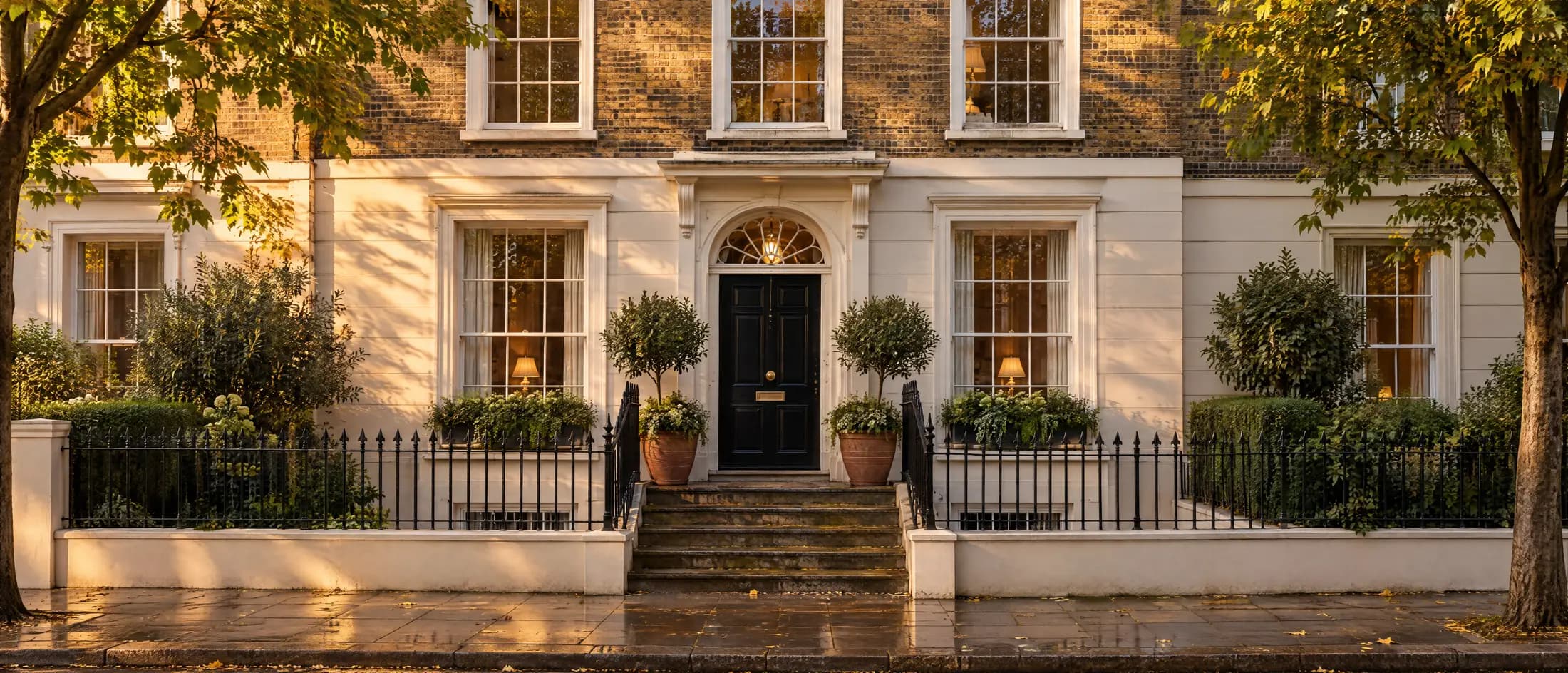
Valuation to completionThe whole process in the order you will meet it, with the timings a sale in these four postcodes actually runs to.
“Tessa achieved a quick off-market sale at the price I wanted.”
D.B.
Here is the whole process, in the order you will meet it, with the timings a sale in these four postcodes actually runs to. Tap any section below to open it, and open as many as you like.
- Day oneValuation
Tessa values in person and shows you the comparable evidence behind the figure.
- Weeks one to twoOn the market
Conveyancer instructed, the house prepared and photographed, then launched openly or offered quietly.
- Weeks four to tenOffer accepted
Every offer checked for funding, chain and solicitor before it reaches you.
- Eight to twelve weeks onExchange
Searches, survey and enquiries done, mortgage offer issued. Only now is it binding.
- One to four weeks laterCompletion
The money moves, the keys are released, and the house is theirs.
Before you list
Three decisions come before a single photograph is taken, and between them they settle most of what the sale will be worth: the price, whether you sell openly or quietly, and whether the paperwork is ready.
ValuationWhat your home is actually worth
A valuation is not a guess and it is not a compliment. It is a view of what a real buyer will pay in the next few months, supported by what comparable houses on comparable streets have actually achieved, rather than what they were advertised at.
Be wary of the agent who gives you the highest number. Overpricing is the most expensive mistake a seller makes. A property that launches too high is seen by every serious buyer in its first three weeks, dismissed, and then ignored when it is reduced, because by then the reduction reads as a fault rather than an opportunity. The house that sells well is usually the one that was priced properly on day one.
Tessa values in person, walks the whole property, and gives you the comparable evidence behind the figure along with an honest view of how long it should take. There is no obligation to instruct her afterwards.
Openly or quietlyOpen marketing, or an off market sale
Open marketing puts the property on Rightmove, Zoopla, OnTheMarket, PrimeLocation and this website, with a board and full photography. It reaches the largest possible number of buyers, which is what creates competition, and competition is what creates price.
An off market sale is offered quietly to buyers already registered and already looking for exactly that house. No listing, no board, no advertising, and no permanent price history attached to your address. It suits owners who want privacy, who are testing the water, or who would rather the street did not know. It reaches fewer people, so it depends entirely on the quality of the buyer list behind it. Tessa has been building hers on the same four postcodes for twenty five years.
You are not locked into either. A quiet approach for three or four weeks, then open marketing if nothing lands, is a common and sensible sequence.
PaperworkWhat to get ready before you market
Most sales that fall apart do so in the legal stage, and most of those delays were avoidable. The best thing you can do for your own sale is instruct a conveyancer when you decide to sell, not when you accept an offer, and have the pack assembled and waiting.
- Energy Performance Certificate. Required before marketing begins, and valid for ten years, so check whether you already hold one.
- Title deeds and Land Registry title. Your conveyancer obtains these. Check that the registered plan matches the boundaries as they stand.
- Leasehold pack, if it is a flat. The lease, the freeholder or managing agent pack, three years of service charge accounts, the buildings insurance schedule, and any major works notices. Managing agents can take six weeks or more to produce this, and they charge for it. Order it early. It is the most common cause of a stalled NW3 flat sale.
- Lease length. Below about eighty years a lease starts to affect both value and mortgageability. If yours is short, take advice on extending before you market, not after an offer.
- Consents and certificates. Building regulation completion certificates, planning permissions, listed building consent, window certificates, electrical certificates and a gas safety record where relevant.
- Conservation area and Article 4. Much of Hampstead, Belsize Park, Primrose Hill and Swiss Cottage sits in a conservation area, and Camden Article 4 directions remove permitted development rights in places. If work was done without the consent it needed, it is far better to find that out now.
- Material information. Estate agents must publish specified material information with every listing, including tenure, council tax band, price and anything that would affect a buyer decision. Tessa will ask you for it up front. Being straight about a known problem costs far less than a buyer discovering it at survey.
Getting it on the market
Presentation is the cheapest money you will ever spend on a sale, and the photographs are the viewing for nine buyers out of ten.
PresentationPreparing the house: eight things that pay for themselves
None of this needs a builder, and all of it changes what a buyer feels in the first minute.
Clear out before you list, not after
Almost everyone tackles years of accumulated clutter only once an offer is accepted, which is exactly the wrong way round. Buyers trading up are looking for space, and buyers downsizing are anxious about losing it, so whoever you sell to the house needs to read as generous. Half the contents of a full room, packed and out of sight, will do more for the price than any amount of advertising.
Kerb appeal, because the drive past comes first
Most buyers walk or drive past before they ever ask for a viewing, and a good number rule a house out at that point without telling anybody. Clear the bins and anything else parked at the front, straighten the blinds so they line up from the pavement, wash the front door, replace the doormat, and put two well planted pots by the step. On a stucco terrace, paintwork that has gone grey is doing real damage to your price.
The first minute decides it
Buyers make their minds up about a house remarkably quickly, and everything after that is them looking for evidence they were right. Give the hall one clear focal point, get the coats and shoes out of it, and make sure the front door opens fully rather than catching on something. A hallway that feels wide is worth more than a kitchen that is merely tidy.
Show the storage, do not stuff it
Buyers open cupboards. A wardrobe crammed to the door tells them the house cannot hold a family’s belongings, and they quietly assume theirs will not fit either. Leave every cupboard, wardrobe and larder no more than two thirds full, and keep the loft hatch clear.
Clean past the point you think is enough
Buyers forgive dated. They do not forgive dirty. Windows inside and out, the inside of the oven, the grouting, the shower screen and the bins. If you do one paid thing before photography, make it a professional deep clean.
Light everything
Many NW3 houses have handsome rooms that are genuinely dark at the back, and a dim room reads to a buyer as a small one. Replace every dead bulb, match the colour temperature through a room so it does not go patchy, add a lamp to any corner that falls away, clean the glass, and cut back whatever is growing across the windows.
Get the house right before the photographer, not after
Everything above needs doing the day before the camera arrives, not the day before the first viewing. Reshooting later also resets how old the listing looks, which helps nobody.
Then let the agent do the viewing
A well prepared house does most of the work on its own. Open the blinds, put the lights on, take the dog out, and leave. Buyers will not say what they really think in front of the owner, and Tessa cannot negotiate for you if she never hears the objection.
MarketingPhotography, brochures and the portals
A prime house deserves to be photographed properly and shot in decent light, with a floorplan that is accurate rather than approximate, because buyers at this level measure rooms against furniture they already own. Where a property warrants it, video and a printed brochure follow.
Listings go to Rightmove, Zoopla, OnTheMarket, PrimeLocation and this website, alongside a direct approach to registered buyers. The description is written to be read by a person, and it is written by the person who valued the house and will conduct the viewings, which is not the case everywhere.
ViewingsHow viewings are run, and the feedback you get
Every viewing is accompanied. Nobody is handed keys and sent off alone, and identity is verified before a viewing is booked with anyone unknown to us. Tessa conducts them herself, which means the person showing a buyer round knows the lease length, the age of the boiler and what the neighbours did with their loft.
You get the feedback as it is, including the parts that are awkward to hear. Three buyers in a row commenting on the same thing is information worth having in week two, when you can still act on it, rather than in week ten.
From offer to keys
Accepting an offer is not the end of anything. In England and Wales nothing is binding until exchange, so this is the stretch that decides whether the sale actually happens.
OffersOffers, and choosing the right buyer
Every offer is put to you in writing, whatever its level. Alongside the number, Tessa checks and reports the things that decide whether it will actually complete.
- Where the money is coming from, and proof of it.
- Whether a mortgage is agreed in principle, and with whom.
- Whether there is a chain, how long it is, and how solid the bottom of it looks.
- Whether a solicitor is already instructed.
- How quickly they need to complete, and whether that suits you.
An offer well above the rest, from a buyer with a flat still to sell, no lender and no solicitor, is usually worth less than a slightly lower one that can exchange in six weeks. You are never obliged to take the highest offer, or any offer.
The legal runFrom accepted offer to exchange
This is where sales are lost, and they are lost to drift rather than to disasters. Expect eight to twelve weeks, longer for a leasehold flat.
- Memorandum of sale. Issued to both solicitors, both parties and any mortgage broker, so everyone starts from the same facts.
- Anti money laundering checks. Agents and solicitors are required to verify identity and source of funds on both sides. Have photographic identification and proof of address ready.
- Draft contract and the property forms. You complete the property information and the fittings and contents forms. Answer them fully and accurately: a concealed problem that surfaces later can follow you after completion.
- Searches and enquiries. Local authority, drainage, environmental and, in Camden, often more besides. Enquiries come back in batches, and answering them the same week rather than the same month is the main thing within your control.
- Survey and valuation. The lender values, and most prime buyers commission a full building survey. If it turns something up, Tessa handles the renegotiation with evidence rather than emotion, usually by getting a proper quote for the work.
- Mortgage offer issued. Nothing exchanges before this lands.
Tessa chases all of it weekly, both solicitors and the whole chain, and tells you where it actually stands rather than that it is progressing.
CompletionExchange, completion and moving day
At exchange the contracts become binding, the completion date is fixed, and the buyer’s deposit, usually ten per cent, is held. From this point neither side can walk away without serious cost.
Completion normally follows one to four weeks later, though it can be the same day if everyone agrees. On the day the money moves, the keys are released, and the property must be empty, clean and left with everything you agreed to leave. Take meter readings, cancel or transfer the utilities and the council tax, and redirect the post.
Money, and the questions everyone asks
What it costs to sell, and the six questions Tessa answers most weeks.
CostsWhat selling costs
- Agency fee. A percentage of the sale price plus VAT, agreed with you before instruction and set out in writing, payable on completion. The terms are on the sellers’ terms page.
- Conveyancing. Your solicitor’s fee plus disbursements. Leasehold costs more than freehold because there is more to do.
- Energy Performance Certificate, where you do not already hold a valid one.
- Leasehold management pack, charged by the freeholder or managing agent.
- Mortgage redemption, including any early repayment charge. Check this with your lender before you commit to a timetable.
- Removals and storage.
Stamp duty is the buyer’s cost, not yours. Capital gains tax does not normally arise on your only or main home, but it can where the property has been let or used for business, so take advice from an accountant.
QuestionHow long does it take to sell a house in NW3?
Allow around three to five months from instruction to completion. Finding a buyer in Hampstead, Belsize Park, Primrose Hill or Swiss Cottage typically takes four to ten weeks depending on price and presentation, and the legal work then takes a further eight to twelve weeks. A leasehold flat with a slow managing agent or a short lease takes longer, sometimes considerably.
QuestionCan I sell without putting my home on Rightmove?
Yes. An off market sale is offered quietly to buyers already registered and known to be looking, with no portal listing, no board and no advertising. It suits owners who want privacy, or who would rather no price history were attached to the address. It reaches fewer buyers than open marketing, so it works best where the buyer pool for that type of house is small and already on the books.
QuestionDo I have to accept the highest offer?
No. You are free to accept any offer, or none. The highest offer is often not the best one: a buyer with a mortgage still to arrange, a flat to sell and no solicitor instructed is a weaker proposition than a cash buyer slightly lower who can exchange in six weeks. The offer that completes is worth more than the offer that impresses.
QuestionWhen does the sale become binding?
On exchange of contracts, in England and Wales. Until that moment either side can walk away without penalty, which is why the weeks between accepting an offer and exchanging are the ones worth hurrying. On exchange you are committed to a fixed completion date and the buyer's deposit is at risk if they pull out.
QuestionDo I pay capital gains tax when I sell?
Not normally on the sale of your only or main home, which is usually covered by private residence relief. It can apply where the property has been let, used for business, is a second home, or sits in very large grounds. The rules change and the answer depends on your circumstances, so take advice from an accountant rather than from an estate agent.
QuestionDo I need an EPC before I market the property?
Yes. A valid Energy Performance Certificate must be commissioned before the property is marketed, and made available to prospective buyers. Tessa arranges one where you do not already hold a current certificate. EPCs last ten years, so an earlier sale or letting may have left you with one still in date.
Thinking of selling?
Tessa values your property herself, shows you the comparable evidence behind the figure, and tells you honestly what it should achieve and how long it should take.
Tessa will get back to you as soon as possible.